
Why Truck Accident Cases Are More Complex Than Car Accidents
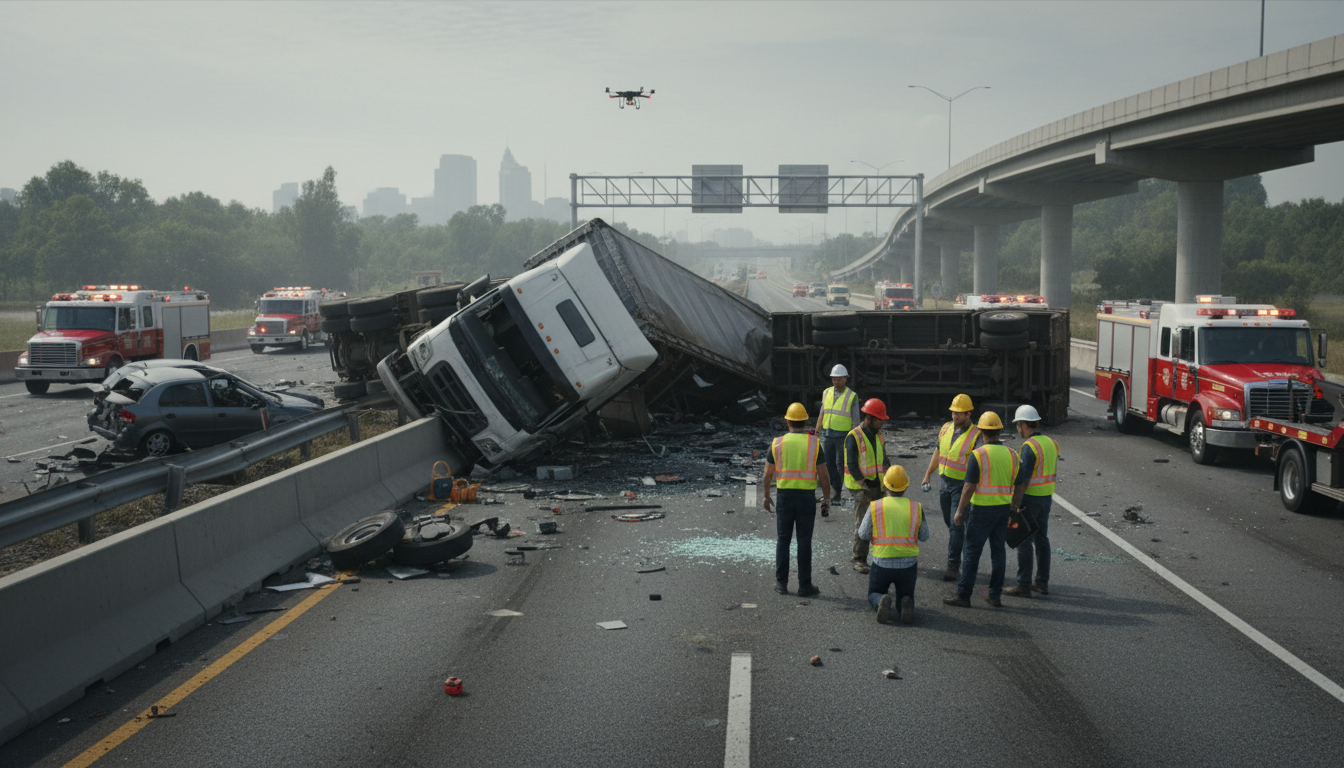
When most people think about a vehicle wreck, they picture a typical “two cars, two drivers” situation—exchange insurance information, file a claim, and try to move on. But in Georgia, truck accident cases (involving 18-wheelers, tractor-trailers, delivery trucks, and other commercial vehicles) are a different animal entirely. They often require deeper investigation, faster evidence preservation, and a strategy built for commercial insurance defense.
At Brandon Smith Law, we regularly explain to clients across Georgia—from Atlanta and Marietta to Macon, Savannah, Augusta, Columbus, and beyond—that a truck crash claim is not just a bigger version of a car accident case. It’s more like a high-stakes, multi-layered liability puzzle. The reason is simple: commercial trucking is governed by more rules, more documentation, more corporate players, and more insurance money—each of which can complicate the path to fair compensation.
Below is a comprehensive look at why truck accident cases are more complex than car accidents in Georgia, with a focus on multi-party liability, the federal/state mix of laws, and insurance challenges that can make or break a claim.
1) Multi-Party Liability: Truck Accidents Rarely Involve Just One At-Fault Person
In a typical Georgia car accident claim, liability often comes down to one main question: which driver caused the crash? Even when fault is disputed, the list of potentially responsible parties is usually short.
Truck accident cases are different because commercial transportation is almost never a one-person operation. A commercial truck on I-75, I-85, I-20, or I-16 may be tied to multiple companies and contractors, all of whom may share responsibility when something goes wrong.
Potentially liable parties in a Georgia truck accident can include:
The truck driver (speeding, distraction, fatigue, impairment, unsafe lane changes, tailgating)
The trucking company (motor carrier) (negligent hiring, poor training, unrealistic schedules, safety policy violations)
The owner of the tractor (if leased)
The owner of the trailer (trailers are often separately owned)
A freight broker (negligent selection of unsafe carriers)
A shipper or cargo-loading team (improper loading, shifting cargo, unsecured freight, overweight loads)
A maintenance contractor (inadequate inspections, missed brake or tire issues, faulty repairs)
A manufacturer (defective tires, brakes, steering components, lighting, underride guards)
This is what lawyers call multi-party liability, and it’s one of the biggest reasons truck accident claims can be more complex than car accident cases. At Brandon Smith Law, identifying every responsible party is a critical step—because each party may have different insurance coverage, different records, and different defenses.
2) Federal and State Laws Intersect in Trucking—and That Changes Everything
Georgia car accidents are generally governed by Georgia traffic laws, Georgia negligence rules, and Georgia insurance procedures. Truck accidents involve those same Georgia laws—but they also implicate federal safety regulations designed specifically for commercial carriers.
The federal layer: FMCSA regulations
Commercial drivers and trucking companies are often subject to Federal Motor Carrier Safety Administration (FMCSA) rules. These federal regulations cover issues that rarely appear in ordinary car accident claims, such as:
Hours-of-Service rules (limits intended to prevent fatigued driving)
Driver qualification requirements (licensing, medical certification, training)
Drug and alcohol testing requirements
Vehicle inspection, repair, and maintenance standards
Cargo securement and weight regulations
Recordkeeping and compliance documentation
In a Georgia truck accident case, a key question is often: Did the driver or carrier violate a safety regulation? If yes, those violations can become powerful evidence of negligence or systemic safety failures. Brandon Smith Law evaluates not only what happened on the roadway, but also whether the carrier’s practices and records show patterns of risky behavior.
The Georgia layer: comparative fault and venue realities
Georgia law also adds complexity through doctrines and practical realities that can impact recovery:
Modified comparative negligence: Georgia follows a rule that can reduce damages if a person is partially at fault, and can bar recovery at a certain fault threshold. In truck cases, defense teams often push hard to shift blame.
Multiple counties and venues: A crash might happen in one county, while the trucking company is based in another state, and the trailer is owned elsewhere. Sorting out jurisdiction and the best path forward can be complicated.
Commercial driving standards and local road patterns: Georgia’s interstates, freight corridors, and metro congestion patterns (especially around Atlanta) can play a big role in how accidents occur and how they’re reconstructed.
At Brandon Smith Law, understanding this federal/state mix is essential—because truck cases often turn on whether a carrier’s back-office decisions violated federal standards, even when the collision itself occurred on a Georgia road.
3) Evidence in Truck Accident Cases Is More Technical—and It Can Disappear Fast
Car accident evidence is often straightforward: photos, a police report, vehicle damage, and medical records.
Truck accident evidence includes all of that, plus layers of commercial data and documentation that can be time-sensitive and controlled by the trucking company. That’s one reason Brandon Smith Law emphasizes early case action—because critical evidence can be overwritten, deleted, or “lost” if it isn’t preserved.
Examples of key evidence unique to trucking cases:
Electronic Logging Device (ELD) data (hours driven, breaks, duty status)
Black box / ECM data (speed, braking, throttle input, engine activity)
GPS and fleet telematics records
Driver qualification file (training, safety history, medical clearance)
Maintenance and inspection records
Dispatch communications (texts, instructions, delivery deadlines)
Load documents (bills of lading, weight tickets, cargo details)
Post-crash drug/alcohol testing records
Onboard camera footage (if equipped)
Carrier safety history (prior violations, out-of-service issues)
This technical evidence can help establish what happened and why, but it requires experience to identify, demand, seen, and interpret. A truck accident claim can rise or fall on whether the right data is obtained early.
4) Insurance Challenges: More Coverage Usually Means More Resistance
It’s true that commercial carriers often have higher policy limits than individual drivers. But in practice, more insurance money often means:
More defense resources
More delay tactics
More aggressive blame shifting
More complex policy analysis
Why truck insurance claims are harder than car accident claims
Multiple insurance policies may apply. A truck crash might involve:
A primary commercial auto liability policy
An umbrella or excess policy
Separate policies for the trailer owner, broker, shipper, or maintenance contractor
And each insurer may deny responsibility, point fingers, or argue that another party should pay first.
Additionally, commercial carriers and insurers often have a rapid response mindset. They may quickly investigate, interview witnesses, and gather statements—sometimes before injured people fully understand their rights or the long-term medical impact of their injuries.
At Brandon Smith Law, we often see early settlement offers in Georgia truck cases that sound helpful on day one but don’t account for the full scope of losses—future surgeries, rehabilitation, lost earning capacity, chronic pain, or life-care needs. Insurance challenges are one of the main reasons these cases require a careful approach instead of a quick decision.
5) Truck Accidents Often Cause More Severe Injuries, Raising the Stakes
A commercial truck can weigh up to 80,000 pounds. In Georgia collisions involving a passenger vehicle, that weight disparity can lead to catastrophic outcomes, including:
Traumatic brain injury (TBI)
Neck and back injuries requiring surgery
Spinal cord damage and paralysis
Multiple fractures
Internal organ damage
Burn injuries
Crushing injuries and amputations
Permanent disability
As damages increase, so does the defense intensity. High-value cases are frequently fought harder and longer, and they often require expert support to document medical needs and financial impacts. Brandon Smith Law focuses on building claims that reflect the real-life consequences of a truck crash—not just the initial ER bill.
6) Expert Witnesses and Specialized Investigation Are More Common
Many Georgia car accident claims can be resolved with basic documentation. Truck accident claims often require specialized professionals to explain complex facts in plain terms:
Accident reconstruction experts
Trucking safety and FMCSA compliance experts
Mechanical engineers (brakes, tires, steering, lighting failures)
Medical experts and life-care planners
Vocational and economic experts (loss of earning capacity)
Why? Because trucking defense teams often dispute key facts: speed, braking, line-of-sight, reaction time, whether fatigue played a role, whether cargo shifted, and whether the carrier followed safety requirements.
At Brandon Smith Law, this investigative depth is part of what makes truck accident cases different—and why they must be handled differently than typical fender-benders.
7) Trucking Companies Are Businesses, and Their Defense Is Often Organized
A driver in a car accident may be an individual with limited resources and limited insurance. A trucking carrier is typically a business with policies, layers of management, and claims procedures designed to protect the company.
That may involve:
Corporate risk management teams
Third-party claims administrators
Defense counsel experienced in trucking litigation
Pre-built narratives about fault
Documentation aimed at compliance—even when real-world practices fall short
This doesn’t mean you can’t hold them accountable. It means the case must be built thoughtfully, using evidence, regulations, and careful claim presentation. Brandon Smith Law approaches Georgia truck accident cases with the understanding that the defense will likely be prepared from day one.
What to Do After a Truck Accident in Georgia
Because truck accident cases can be complex, early steps matter. If you were injured in a Georgia truck crash, consider these practical actions:
Get medical care immediately and follow up consistently
Take photos of the scene, vehicles, and injuries (if safe)
Collect witness names and contact information
Keep all medical bills, diagnosis notes, and prescriptions
Avoid giving recorded statements to insurers before understanding your situation
Write down symptoms and how injuries affect daily life
Act quickly—because trucking evidence can be time-sensitive
Brandon Smith Law can help evaluate the crash circumstances, preserve critical evidence, and determine whether multiple parties share responsibility.
Final Takeaway: Truck Accident Cases Require a Truck-Specific Strategy
Truck accident cases are more complex than car accidents because they involve multi-party liability, a federal/state mix of trucking regulations and Georgia law, and insurance challenges that can make fair recovery difficult without strong evidence and a strategic approach.
If you’re dealing with a commercial truck crash in Georgia—whether it happened in Atlanta, Sandy Springs, Decatur, Marietta, Macon, Savannah, Augusta, Columbus, Athens, or along major corridors like I-75, I-85, I-20, or I-16—talking with a legal team that understands trucking-specific evidence and insurance tactics can make a measurable difference.
Brandon Smith Law is committed to helping injured Georgians navigate the complexity of truck accident claims with clarity, urgency, and careful case-building.
