
Georgia Premises Liability Statute of Limitations and Comparative Fault Rules

Filing Deadlines, Shared Responsibility, and How Fault Can Affect Your Financial Recovery
Premises liability accidents — from slip and falls in grocery stores to negligent security incidents at apartment complexes — can leave victims facing serious injuries, mounting medical bills, and long-term stress. But in Georgia, pursuing compensation is not just about proving negligence. Strict filing deadlines and the state’s modified comparative fault laws can significantly affect whether you recover damages — and how much you receive.
At Brandon Smith Law, our Georgia premises liability attorneys help injured individuals understand these legal rules and how they apply to real-world cases throughout the state. If you’ve been hurt on someone else’s property in Georgia, knowing the statute of limitations and comparative fault rules is essential to protecting your rights.
Understanding Premises Liability Laws in Georgia
Georgia premises liability law requires property owners and managers to maintain reasonably safe conditions for lawful visitors. When hazards like wet floors, broken stairs, poor lighting, or inadequate security lead to injuries, victims may be entitled to compensation.
However, two major legal concepts often determine the outcome of a case:
The statute of limitations — the deadline for filing a lawsuit
Modified comparative fault — Georgia’s system for assigning shared blame
Both can dramatically impact a claim handled by Brandon Smith Law or any premises liability attorney in Georgia.
Georgia’s Premises Liability Statute of Limitations
One of the most critical legal rules in any Georgia injury case is the filing deadline. Under Georgia law, most personal injury claims — including premises liability cases — must be filed within two years from the date of the injury.
Why the Two-Year Deadline Matters
The statute of limitations exists to ensure cases are brought while evidence is still fresh. Missing this deadline usually means losing the right to pursue compensation entirely, regardless of how strong your case may be.
For example:
A slip and fall in a Cumming, Georgia shopping center typically triggers a two-year clock starting on the date of the fall.
If a loved one dies due to unsafe property conditions, wrongful death claims also generally carry a two-year deadline.
Because surveillance footage, witness memories, and maintenance records can disappear quickly, contacting a Georgia premises liability lawyer early — like Brandon Smith Law — can make a significant difference.
Are There Exceptions to the Deadline?
While the general rule is two years, certain situations may alter the timeline:
Cases involving government entities may require earlier notice.
The discovery rule can sometimes delay the start of the clock when injuries aren’t immediately known.
Statutes of repose may create absolute deadlines in specialized cases.
An experienced Georgia premises liability attorney can evaluate whether any exceptions apply to your case.
Georgia’s Modified Comparative Fault Law Explained
Even when a property owner is negligent, compensation is not guaranteed. Georgia follows a modified comparative negligence system under O.C.G.A. § 51-12-33.
This law recognizes that accidents often involve more than one contributing factor — including the actions of the injured person.
The 50% Bar Rule
Georgia’s system works like this:
If you are less than 50% at fault, you may recover compensation — but your award will be reduced by your percentage of fault.
If you are 50% or more responsible, you cannot recover damages at all.
This is commonly called the “50% bar rule.”
Example:
If a jury awards $100,000 in damages but finds you 20% responsible for your fall, your recovery would be reduced to $80,000.
But if you were found 50% responsible — perhaps for ignoring posted warnings — you could receive nothing.
How Comparative Fault Applies in Georgia Premises Liability Cases
Comparative fault issues arise frequently in Georgia property injury claims. Insurance companies often argue that victims contributed to their own accidents by:
Looking at their phone while walking
Wearing unsafe footwear
Ignoring warning signs
Entering restricted areas
Under Georgia law, even partial negligence by the injured person can reduce compensation proportionally.
At Brandon Smith Law, our approach focuses on building strong evidence — including surveillance footage, witness statements, and maintenance records — to challenge unfair blame-shifting tactics.
Shared Liability and Multi-Party Claims
Many premises liability cases involve more than one potentially responsible party. For example:
A property owner and a third-party maintenance company
A landlord and a security contractor
Multiple businesses sharing responsibility in a commercial plaza
Georgia law allows fault to be divided among all parties involved. Your percentage of negligence is compared to the combined fault of the defendants, not just one individual.
This can benefit injured victims by allowing recovery even when several defendants share responsibility.
The Role of Avoidable Consequences in Georgia Law
Georgia also recognizes the doctrine of “avoidable consequences,” which means a person may lose or reduce recovery if they failed to use ordinary care to avoid injury or reduce damages.
Examples might include:
Ignoring obvious hazards
Failing to seek medical treatment promptly
Continuing risky behavior after recognizing danger
Insurance companies often rely on this concept to argue that victims share blame — which is why legal guidance from a Georgia premises liability attorney is critical.
Why Comparative Fault Makes Evidence So Important
Because fault percentages directly impact financial recovery, evidence plays a central role in Georgia premises liability claims.
Strong evidence may include:
Surveillance footage showing unsafe conditions
Incident reports or maintenance records
Expert testimony about property safety standards
Photos taken immediately after the accident
Even a small shift in fault — from 50% to 49% — can mean the difference between recovering damages and receiving nothing under Georgia law.
At Brandon Smith Law, we focus on gathering and preserving evidence early to protect our clients’ claims.
How Shared Blame Can Affect Your Compensation
Understanding how comparative fault reduces compensation is essential when evaluating a premises liability case in Georgia.
Here’s a simplified example:
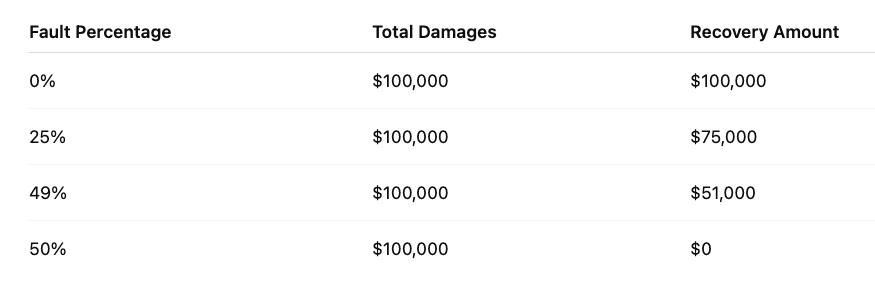
This sharp cutoff at 50% means insurance companies often try to shift as much blame as possible onto injured victims.
Working with an experienced Georgia premises liability attorney like Brandon Smith Law can help ensure your side of the story is fully represented.
Local SEO Insight: Premises Liability Claims Across Georgia
From Atlanta apartment complexes to retail centers in North Georgia communities, unsafe property conditions can occur anywhere. Georgia residents frequently face hazards such as:
Wet floors in grocery stores
Poorly lit parking lots
Negligent security in urban areas
Broken sidewalks or staircases
Brandon Smith Law helps injured clients throughout Georgia understand their legal rights, filing deadlines, and how comparative fault may affect their case.
When Should You Contact a Georgia Premises Liability Lawyer?
Because of the two-year statute of limitations and the complexity of comparative fault laws, it’s best to seek legal advice as soon as possible after an accident.
You should consider contacting Brandon Smith Law if:
You were injured on someone else’s property in Georgia
An insurance company is blaming you for the accident
You’re unsure how shared fault affects your claim
Evidence like video footage may be at risk of being lost
Early legal intervention can help preserve evidence, protect your claim from missed deadlines, and position you for the strongest possible recovery.
Final Thoughts: Protecting Your Rights Under Georgia Law
Georgia’s premises liability laws can be complex, especially when strict filing deadlines and comparative fault rules come into play. Missing the statute of limitations or being assigned too much blame can completely bar financial recovery — even in serious injury cases.
Understanding your legal options is the first step toward protecting your future. At Brandon Smith Law, our Georgia premises liability attorneys are committed to helping clients navigate the legal process, challenge unfair fault allegations, and pursue the compensation they deserve.
If you’ve been injured due to unsafe property conditions anywhere in Georgia, don’t wait — the clock may already be ticking on your claim.
