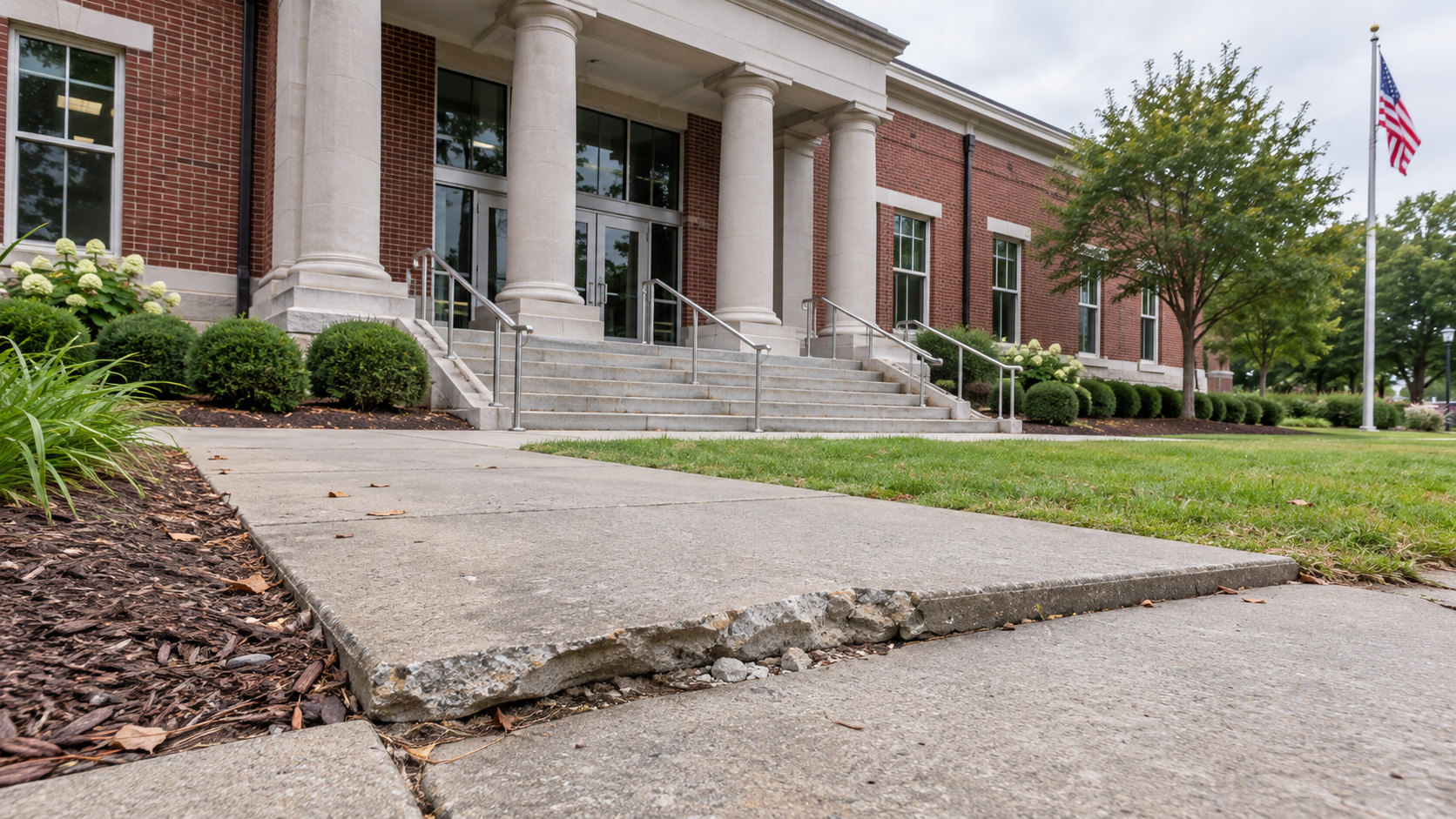
Injured on City or County Property in Georgia?
Different Rules. Earlier Deadlines. Get Answers Promptly.
An injury at a public building, park, sidewalk or other government property raises questions beyond how the accident happened. Identifying the responsible entity, evaluating government immunity and meeting special notice requirements can be essential to determining whether a claim can proceed.
Brandon Smith Law helps injured people understand these issues. Based in Peachtree Corners, we evaluate serious injury matters throughout Gwinnett County and across Georgia.
Do not assume the deadline for an ordinary private-property lawsuit is the only deadline that applies.
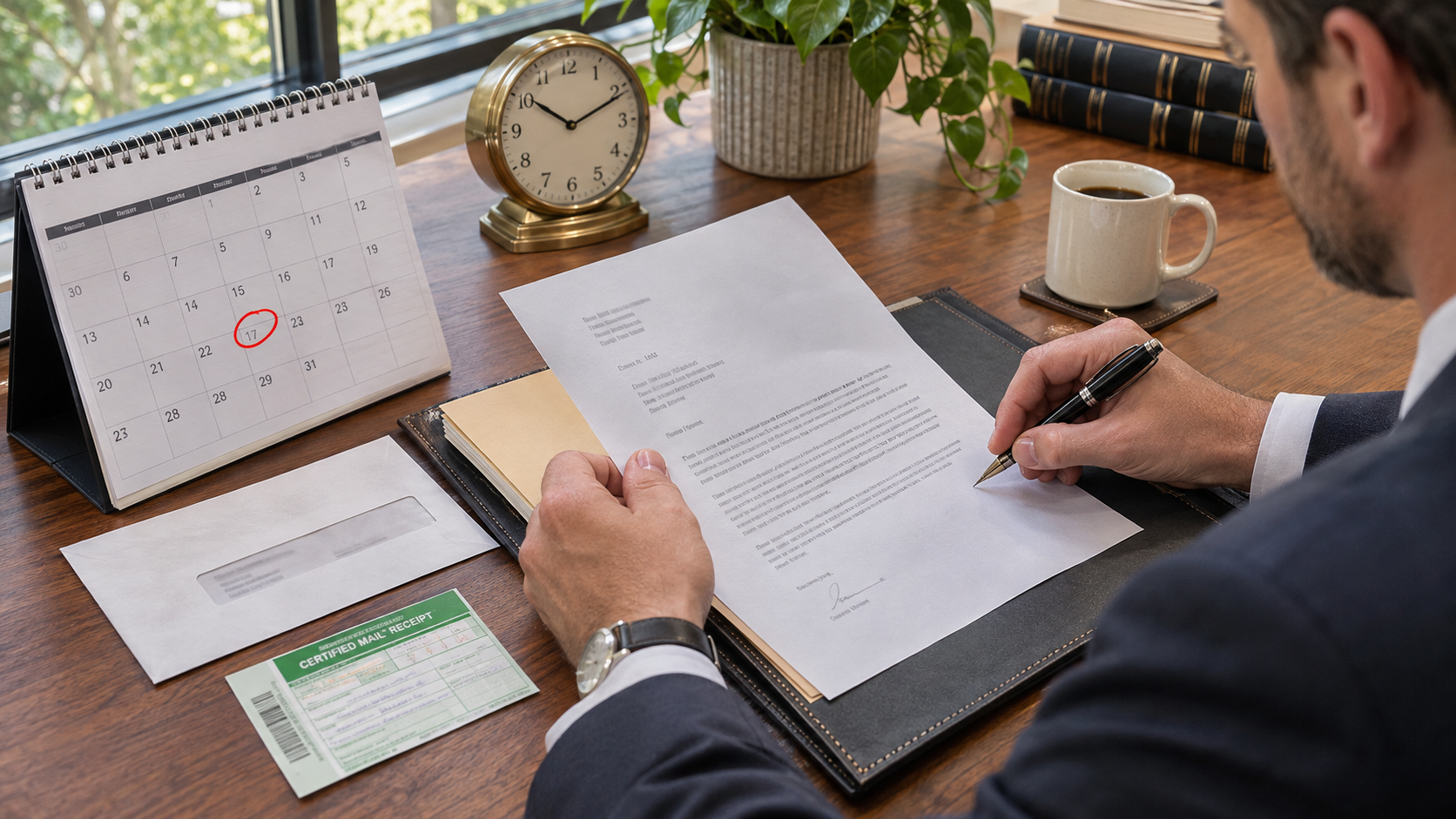
A Notice Deadline May Come Before the Lawsuit Deadline
Certain Georgia government claims require formal notice before a lawsuit can proceed. Common statutory requirements include:
City Claims
Claims for personal injury or property damage against a municipality generally require written notice within six months of the event under O.C.G.A. § 36-33-5.
County Claims
Claims against a county generally must be presented within 12 months after they accrue or become payable under O.C.G.A. § 36-11-1.
State Claims
For claims governed by the Georgia Tort Claims Act, written notice generally must be given within 12 months after the loss was discovered or should have been discovered under O.C.G.A. § 50-21-26.
These are general summaries, not a calculation of your deadline. Exceptions, claim types and the identity of the entity can change the analysis. Separate lawsuit deadlines also apply.
Contact an attorney promptly—even if you are unsure who owns the property or believe a deadline may already have passed.

Who Actually Owns or Controls the Property?
A property’s location does not establish who is legally responsible for it. A building inside a city may belong to the county, the state, a separate authority or a private owner.
A public facility may also involve private management companies, maintenance providers or contractors. A sidewalk or parking area may have different ownership or maintenance responsibilities from the building beside it.
We investigate ownership, control, maintenance responsibilities and the conduct connected to the injury. Identifying the correct parties helps determine which legal rules and notice requirements need attention.
Unsafe Property Does Not Automatically Create a Government Claim
Government entities have legal protections commonly called sovereign or governmental immunity. A dangerous condition and a serious injury do not, by themselves, establish that a government entity can be sued for damages.
An attorney must identify a legally recognized basis for proceeding, including any applicable waiver of immunity. The analysis can differ between cities, counties, state agencies and other public entities.
Insurance may be relevant, but its existence alone does not establish that immunity has been waived. The applicable law and policy terms require review.
Providing timely notice preserves only one part of the process. It does not establish negligence, waive immunity or guarantee that a claim is viable.
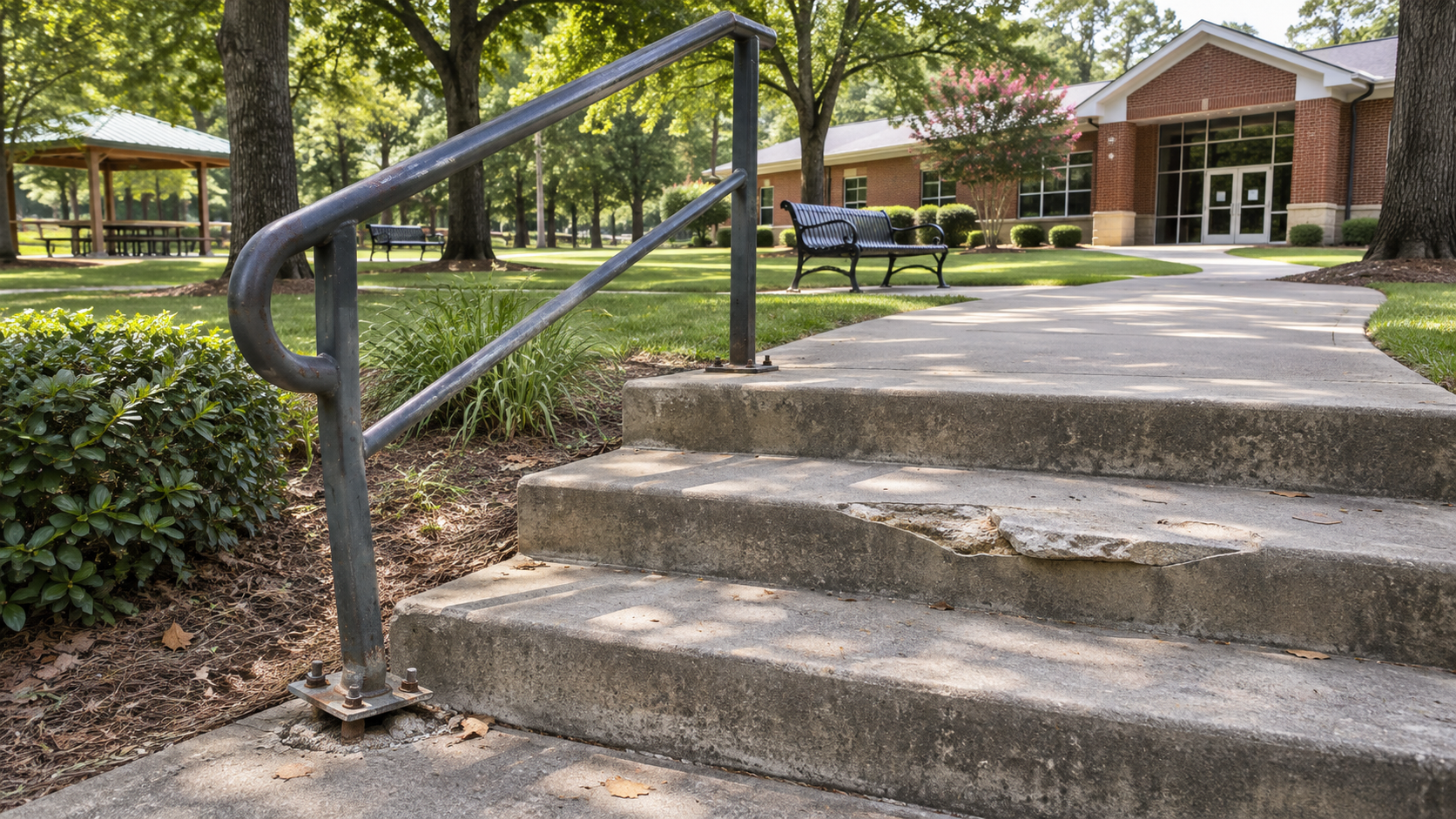
Public-Property Injuries That May Need Legal Review
Questions about government responsibility can arise after incidents involving:
Damaged stairs, handrails or walking surfaces at public buildings
Dangerous conditions in public parking areas
Falling fixtures or structural components
Injuries at parks and recreation facilities
Sidewalk, drainage or roadway-related conditions
Maintenance or construction work involving outside contractors
These examples identify situations that warrant investigation—not situations in which government liability is automatic. Different activities and locations may carry additional legal protections or restrictions.
What to Do After an Injury on Public Property
Get medical care and follow your treatment instructions.
Report the incident to the appropriate staff or responding agency. Request a copy of any incident report and save the report number.
If safe, photograph the condition, surrounding area, building signs and exact location. Preserve witness contact information, relevant clothing or footwear, receipts and messages.
Keep records of your medical care, missed work and expenses. Save correspondence from the government entity, its insurer and any contractors involved.
Contact an attorney promptly to identify the responsible parties and evaluate notice requirements. Do not wait until treatment is finished to ask about deadlines.
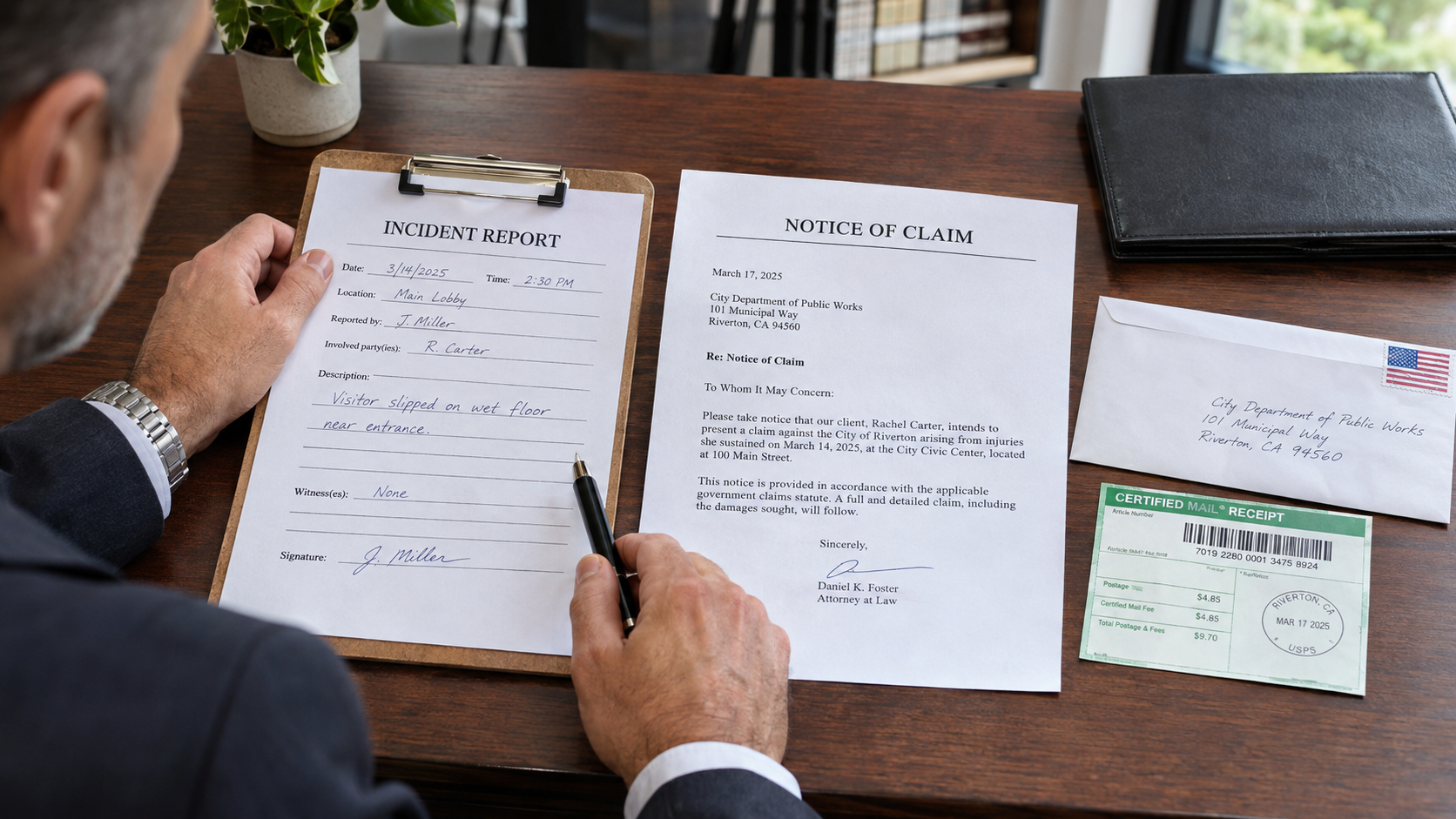
An Incident Report May Not Be the Required Legal Notice
Telling a facility manager, completing an accident form or speaking with an insurance adjuster may help document the event. Those steps do not necessarily satisfy a statutory notice requirement.
A legally sufficient notice may require particular information, delivery to designated officials or agencies, and a specified method of service. City claims, for example, include requirements concerning the specific monetary amount sought and service on designated city officials.
Do not assume an ongoing investigation, insurance discussion or promise to call you back extends a deadline. An attorney can evaluate what must be provided, to whom and by when.
A Careful Evaluation of Your Next Steps
Brandon Smith Law examines the incident, the responsible entities and the legal barriers that may affect a claim.
Our evaluation may include ownership records, maintenance agreements, incident reports, photographs, available recordings and relevant insurance information. We also assess the evidence connecting the condition to your injury.
Brandon’s trial experience and background representing insurers and corporations inform how he evaluates disputed responsibility and prepares claims. If the circumstances support representation, we explain the process and the issues requiring further investigation.
-
No. A claim requires more than proof that an injury occurred. Responsibility, the applicable legal duty, immunity and procedural requirements all need evaluation.
-
Not necessarily. An incident report may differ from the formal notice required by law. Have an attorney review what was submitted and whether additional action is needed.
-
Do not wait to seek advice about deadlines. Notice requirements can arise while treatment is ongoing. An attorney can evaluate how to address the information required for your claim.
-
The contractor’s conduct and responsibilities may need separate investigation. The involvement of a government entity does not automatically resolve whether a private business can be held responsible.
-
No. Different notice statutes, immunity rules and procedures may apply. Separate public authorities and other entities can also require a different analysis.
-
Contact an attorney promptly rather than making that determination yourself. The relevant entity, claim, timing rules and any applicable exceptions need review.
Frequently Asked Questions

Discuss Your Property Injury With Brandon Smith Law
Get Answers Before More Time Passes
If you were seriously injured on city or county property, contact Brandon Smith Law to discuss the incident and the deadlines that may apply.
📞 Call 678-831-5278 or request a free consultation online.
Based in Peachtree Corners. Serving Gwinnett County and clients across Georgia.